
When an Older Parent Does Not Want Help: How to Start the Conversation
- Louise Greene and Kerry Mann
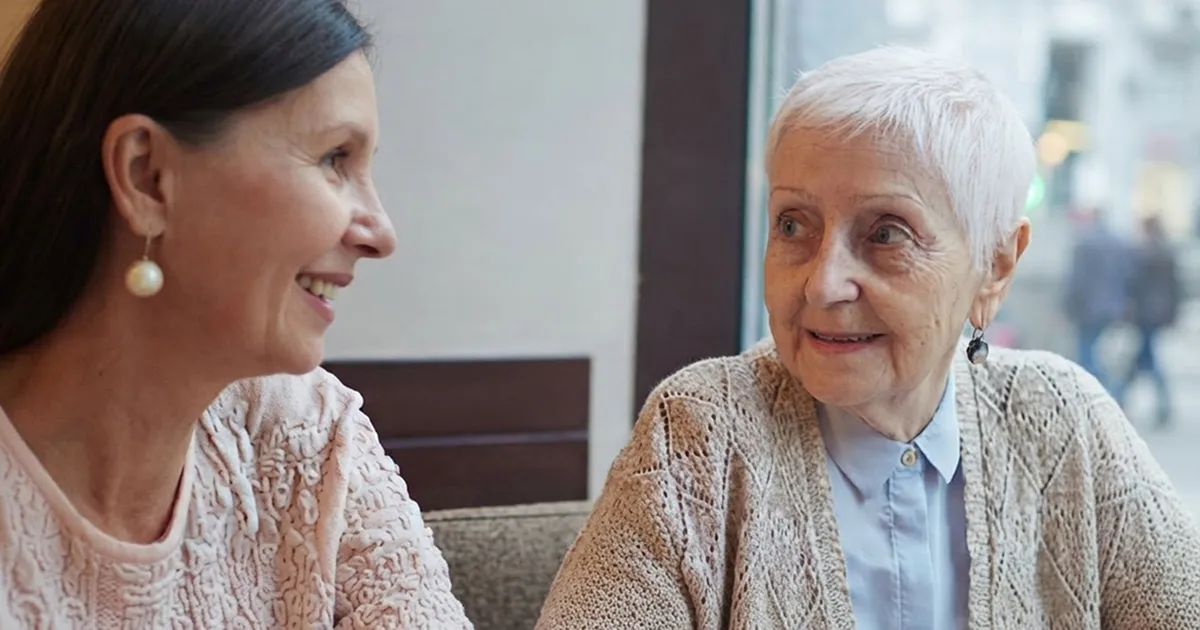
Some of the hardest family conversations are the ones people put off because they care so much. Talking to an older parent or family member about getting help is often one of them. You may be noticing falls, missed medication, an empty fridge, unopened mail, poor eating, increasing forgetfulness, or simply the sense that everyday life is becoming harder than it used to be.
Table of Contents
ToggleBut when you try to raise it, the response is often immediate: “I’m fine.” “I don’t need help.” “I’m managing.” For the sandwich generation, caring for an older parent coincides with juggling children, work and the demands of everyday life. So, when something no longer feels quite right, the conversation can feel loaded before it even begins. You are trying to be supportive, not controlling.
You want to respect independence, but you are worried about safety, wellbeing and what may happen if nothing changes. If this sounds familiar, you are not alone. Many older people do not want to ask for help, even when they need it. That does not mean the conversation is hopeless. It usually means it needs to be approached with care, patience and the right language. It’s a journey.
Why an older parent may not want help
Often, the issue is not the help itself. It is what the help seems to mean.
You are thinking about support, safety and making daily life a little easier. Your parent hears something very different:
- I am losing my independence
- My family thinks I cannot cope
- I am becoming a burden
- Strangers will be coming into my home
- This is the start of bigger changes I do not want
That is why these conversations can become emotionally charged so quickly. Many older people have spent decades being capable, private and self-reliant. Accepting help can feel uncomfortable, exposing, or like the beginning of losing control. Some are also trying to protect their children, especially if they can already see how stretched family life is.
So, while this may look like a practical conversation from the outside, it is rarely just about logistics. It is about identity, dignity, fear, family roles and love.
Start with the right goal
The first conversation does not need to solve everything. In fact, trying to solve everything is often what makes it go badly. A better goal is to keep it simple:
- lower defensiveness
- show respect
- name one concern clearly
- agree on one small next step
That may not feel like much, but it is often how progress begins. In most families, this is not one conversation. It is a few conversations over time.
Pick your moment carefully
Timing matters more than people realise. Try not to raise the topic straight after a fall, during an argument, when someone is tired, or in front of too many other family members. It is usually better to choose a calm, private moment and keep the first conversation fairly short.
Even asking permission can help.
You might say: “Could we have a quick chat about how things have been feeling lately?” or “Is now a good time to talk for a few minutes about mornings? I’ve noticed they seem a bit harder.”
That small step can soften the conversation straight away.
Talk about what you have noticed
When an older parent does not want help, families often get stuck because they move too quickly into labels and conclusions. Try to stay with what you have actually noticed.
That means avoiding phrases like:
- “You can’t manage anymore.”
- “You need help.”
- “You’re getting forgetful.”
- “You’re not safe.”
Instead, use specific and recent examples.
For example:
- “You’ve had two near falls on the back steps this month.”
- “The evening tablets were missed twice last week.”
- “The fridge was almost empty when I came over.”
- “You seemed very tired and breathless walking to the kitchen.”
A useful way to frame it is:
Observation → impact → concern
For example: “I’ve noticed you’ve nearly fallen twice on the back steps, and I’m worried that if it happens again you could really hurt yourself.” That is usually much easier to hear than broad statements about ageing or coping.
Suggest one small step, not a big change
A lot of these conversations become too big too quickly. Suddenly you are talking about ageing, future care, family roles and every worry you have been carrying.
It usually goes better when you keep it practical:
- name the problem clearly
- suggest one small solution
- make it a trial, not a permanent decision
For example: “The steps seem less steady than they used to. Could we try a rail and a physio review, then see if it helps?” or “Mornings seem to be getting harder. Could we try some help on shower days for two weeks and then review it?” That feels very different from asking someone to accept major support all at once.
Start with light-touch support
When families are worried, it is easy to jump straight to bigger solutions. But if the first suggestion feels too large, the older person is much more likely to say no.
It is usually better to start with the lightest-touch support that matches the issue. That might be:
- a medication blister pack
- grocery delivery
- a meals service a few times a week
- one cleaner visit
- a physiotherapy review for balance
- an occupational therapy home safety review
- a grab rail or better lighting
Small changes are often easier to accept. They also help preserve confidence and control.
Keep autonomy front and centre
A lot of resistance softens when the older person still feels they have choice.
Helpful phrases include:
- “You’re in charge.”
- “This is just a trial.”
- “We can review it together.”
- “Let’s see what works for you.”
- “A little help now may help you stay at home longer.”
That last point matters. The right support does not have to reduce independence. In many situations, it is exactly what helps someone stay safer, stronger and more independent for longer. It also gives them someone else to talk to and to keep social
What to say when they say, “I’m fine”
This is one of the most common responses, and one of the hardest. Usually, arguing does not help. A better approach is to acknowledge what they are saying, then come back to the specific concern.
You could say:
- “I know staying independent matters to you, and I respect that. I’m just worried about your safety because of the falls.”
- “I hear that you feel you’re managing. I’ve noticed a few things that make me think life may be getting harder than it needs to be.”
- “You’re in charge. I’m only asking whether we can try one small thing and see what you think.” The aim is not to win the conversation. It is to keep it open
Bring in outside voices if needed
Sometimes a parent will hear something more easily from a GP, pharmacist, physiotherapist or other trusted professionals than from their child.
That is often because family conversations can get tangled up in role reversal. Outside voices can make the issue feel less personal and more practical.
That might mean:
- asking the GP to raise falls, medication or memory concerns
- booking a 75+ health assessment and involving the practice nurse
- arranging a physiotherapy or occupational therapy review
- asking a trusted friend or relative to gently reinforce the message
You might say:
“Would you be open to talking this through with the GP, just to get another view?”
That can feel much easier than trying to push straight into formal support.
What matters most
These conversations are rarely easy. They can bring up fear, frustration, guilt and sadness, often all at once. And for people in the sandwich generation, they usually arrive in the middle of everything else — work, children, family responsibilities and the sense that everyone needs something from you at once.
You do not need to solve it all in one conversation. Often the best first step is simply to notice what is changing, raise it gently, and see whether one small piece of support might make life easier.
How Aged Care Conversations can help
At Aged Care Conversations, we support older people and families to understand options, prepare for decisions and approach difficult conversations with more clarity and confidence.
We offer curated resources, Aged Care School, one-to-one support, and our Weekly Open Line for practical, plain-English guidance.
Need more help? We have a longer practical guide on talking to an older parent about getting help. If that would be useful, get in touch to request a copy when available.
For More Information
Call us, or book a free 15-minute conversation. If we’re not the right help for you, we’ll say so – and point you somewhere that is.